Key points
- Heavy-duty totes with lids take the tools, camping gear and sports equipment that wait out a season.
- Paint, cleaners, oils, batteries and pesticides stay in their original labeled containers, as EPA advises.
- Put the heaviest tote at the bottom and let recessed lids or interlocking bases hold the column in line.
- Label each tote on the lid and on the end that faces the room, and give each kind of gear one color.
Two kinds of garage storage
In a lot of garages the two kinds sit side by side: a tent bag next to a jug of weed killer, a box of holiday lights on top of the paint cans. Sorting them apart is the first job. Gear that is safe to pack away goes into totes. Products whose labels carry storage directions go on a shelf or into a cabinet, still in the containers they came in.
The U.S. Environmental Protection Agency names paints, cleaners, oils, batteries and pesticides among household products that can contain hazardous ingredients. It asks you to follow the use and storage instructions on each label. That one request shapes the layout of a garage or basement, so settle it before you choose a single tote.
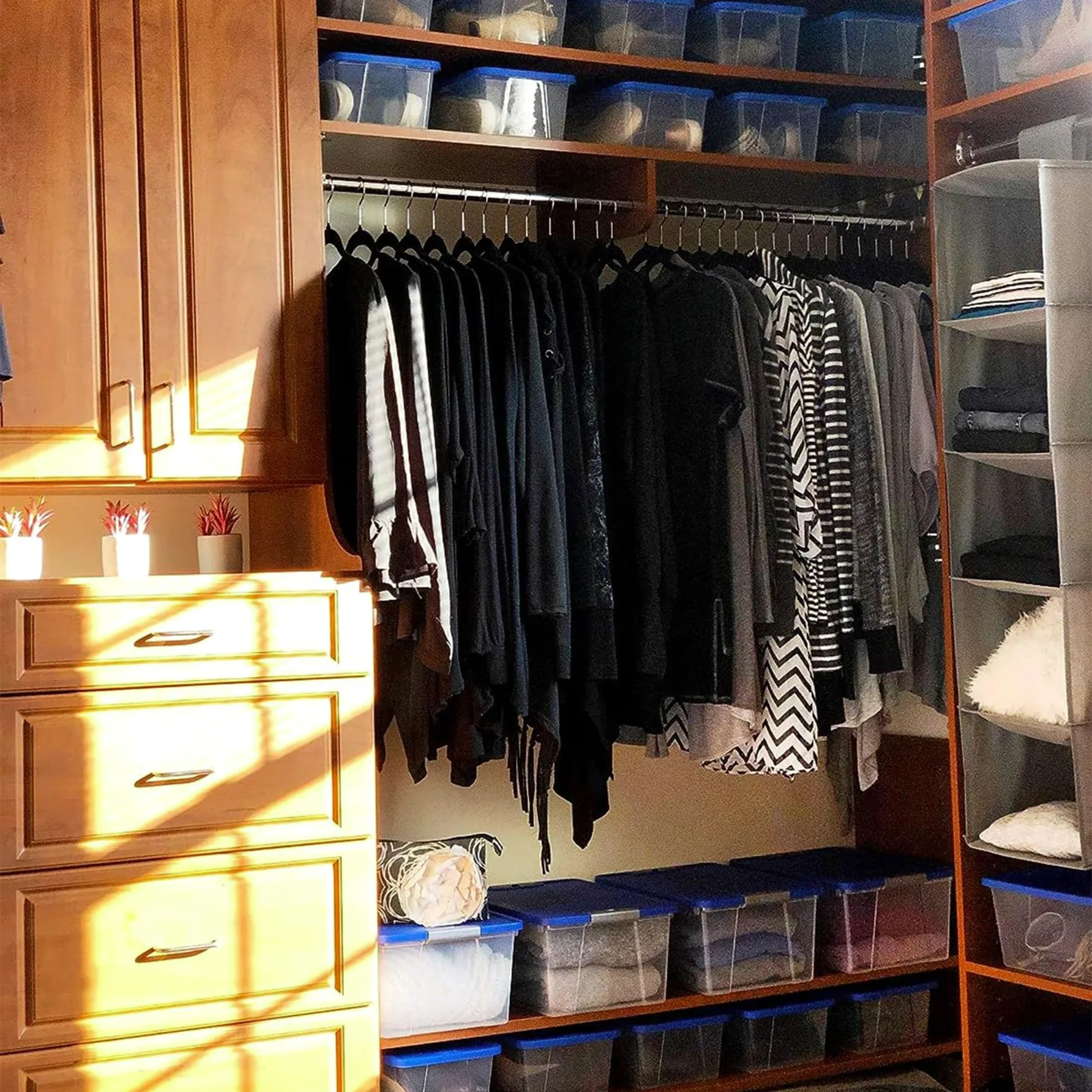
- Lidded totes: tools, cords, camping gear, sports equipment, seasonal clothing and holiday decorations.
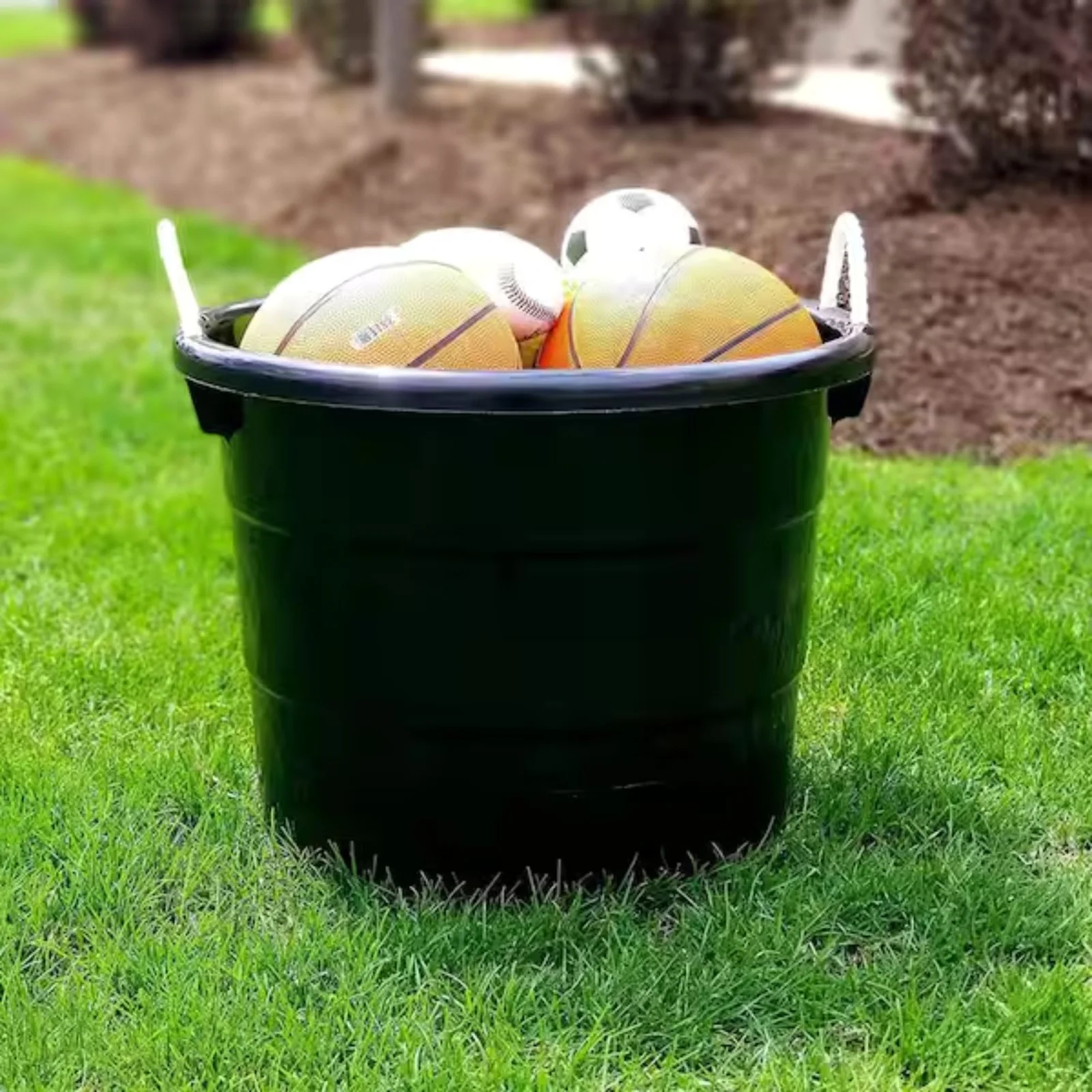
- Open tubs: balls, garden tools, potting soil and whatever you grab on the way out the door.
- A shelf, in the original container: paint, cleaners, oils and batteries, each with its label facing out.
- Behind a lock, if children live in the house: pesticides, chemicals and cleaning supplies.
What goes in a tote
Tools, extension cords, camping gear, sports equipment and seasonal clothing all pack well. Our heavy-duty totes are built around that load. The Durabilt line runs from 15 to 34 gallons in thick plastic, with hinged flip lids on the 15- and 27-gallon sizes and a snap-on lid on the 34.
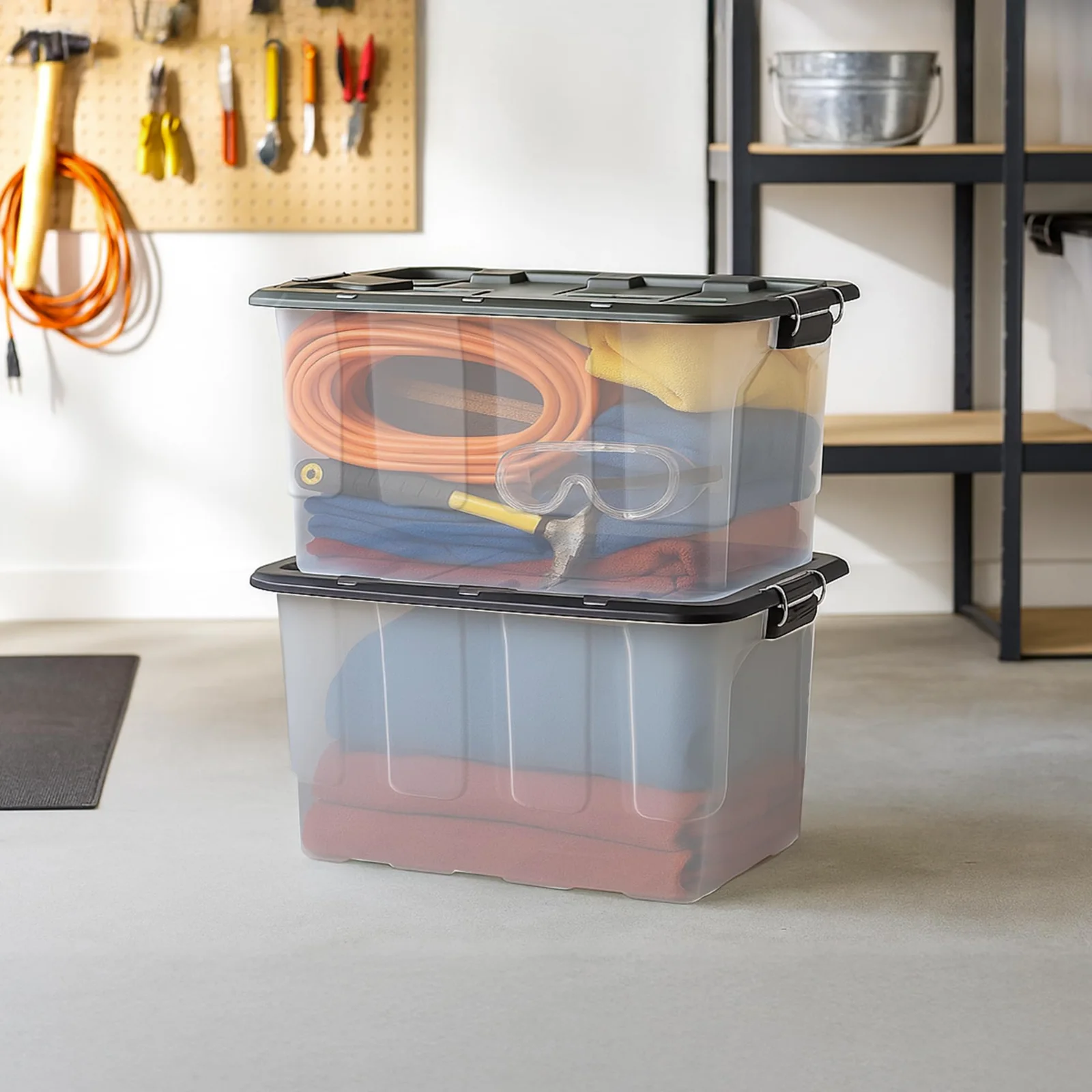
Shape matters more than gallons here. The 27-gallon Durabilt is 30.75 inches long and 14.38 inches tall, so a hockey stick, a rolled rug or a strand of garland lies flat along the bottom. At 17.25 inches high, the 22-gallon model leaves room for a rolled sleeping bag standing on end. For gear you reach for every week, a clear tote saves opening three lids: the 30-gallon latching tote shows its extension cords or beach towels through the sides.
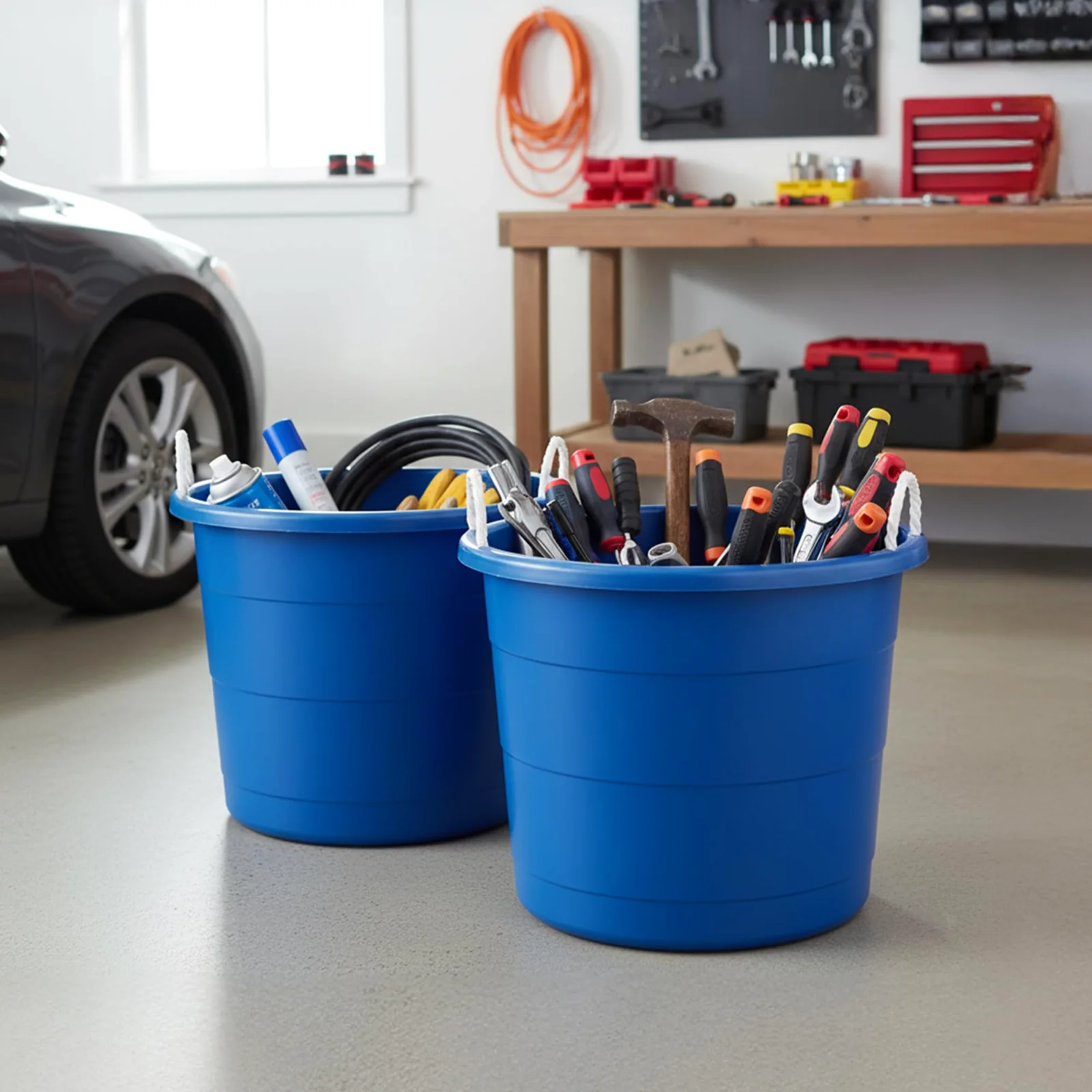
Open tubs do a different job. A rope-handle utility tub has no lid to set down, so balls, garden tools and a bag of potting soil drop straight in. The nylon handles flex in your grip on the walk to the yard. Empty tubs nest, and a stack of six takes little more shelf room than one.
| Tote or tub | Capacity | Outside size (inches) | Lid |
|---|---|---|---|
| Durabilt 15 Gallon | 60 qt (15 gal) | 26 x 17.75 x 12.25 | Hinged flip lid |
| Durabilt 18 Gallon | 72 qt (18 gal) | 22.5 x 17.5 x 16.5 | Snap-fit, recessed |
| Durabilt 22 Gallon | 88 qt (22 gal) | 23.75 x 18 x 17.25 | Latched by the handles |
| Durabilt 27 Gallon | 108 qt (27 gal) | 30.75 x 20.50 x 14.38 | Hinged flip lid |
| Durabilt 34 Gallon | 136 qt (34 gal) | 32.5 x 18.5 x 16.75 | Snap-on |
| 20 Gallon Latching Tote | 80 qt (20 gal) | 24 x 17.5 x 17.5 | Snap-on, bases interlock |
| 30 Gallon Latching Tote | 120 qt (30 gal) | 32 x 19 x 17.18 | Black lid, clear base |
| 18 Gallon Rope-Handle Tub | 72 qt (18 gal) | 21.5 x 21.5 x 16.25 | Open top |
What stays in its own labeled container
EPA is direct about this. Never store hazardous products in food containers, keep them in their original containers, and never remove the labels. Leftovers of one product should not go into another, because incompatible products might react, ignite or explode. Pouring thinner into a spare bottle or tipping two cleaners into one jug throws the label away, and the label is the instruction sheet.
Pesticides get their own page of advice from EPA. Store them out of reach of children and pets, if possible in a locked cabinet in a well-ventilated utility area or backyard shed. Keep them away from food, animal feed and medical supplies, and in the original container with its label, never in a soft drink bottle. Child resistant does not mean child-proof, the agency adds, so close each container tightly.
The U.S. Consumer Product Safety Commission says nearly seven out of 10 poisonings occurred in the home. Its advice is to store chemicals and cleaning supplies in a locked cabinet or box out of the reach of children. Household chemicals stay in their original child-resistant containers, and laundry packets stay in their original containers, out of a child's sight and reach. A snap-on tote lid is not a lock, so cleaners belong up high or behind a locked door, not in a bin on the floor.
| Product | Container | Where it lives |
|---|---|---|
| Paint, oil, cleaners, batteries | Original container, label on | Where the label directs, never in a food container |
| Pesticides | Original container, never a soft drink bottle | Locked cabinet in a ventilated utility area or shed, away from food, feed and medical supplies |
| Household chemicals | Original child-resistant container | Locked cabinet or box, out of children's reach |
| Laundry packets | Original container | Out of a child's sight and reach |
| Empty containers | Can still hold residue | Kept apart from your gear until disposal |
Keep flammables away from the car and the mower
Look around a garage and you often find the very ignition sources EPA lists: a car, a lawn mower, a grill, sometimes the furnace. Its pesticide advice says flammable liquids belong outside your living area and far away from sources like these. In practice that means a shelf on the wall farthest from where the car parks and the mower sits, not the corner right beside them.
Even empty containers can pose hazards because of the residue left inside, EPA warns. So an empty pesticide jug or paint can is not a free parts bin, and it does not belong in a tote with your camping gear. A container that has started to corrode needs special handling, and EPA suggests calling the hazardous materials office of your town or your local fire department about it.
Basements: off the floor and away from water
Basements add damp to the list. EPA says not to store pesticides where flooding is possible, and the same habit serves everything else down there. Set totes on shelving or on boards rather than straight on a floor that has ever been wet, and keep the products with warning labels higher still.
A basement storeroom also suits the deep molded bins. Our 18-gallon molded bin measures 23.5 by 17.5 by 15.5 inches, deep enough for folded blankets or a row of shoe boxes. Its lid sits in a recess, so a column of three or four bins stays upright in a corner instead of leaning into the wall. With the lids off, empty bins slide into one another and take up little room on a shelf until the next move.
Stacking without a tumble
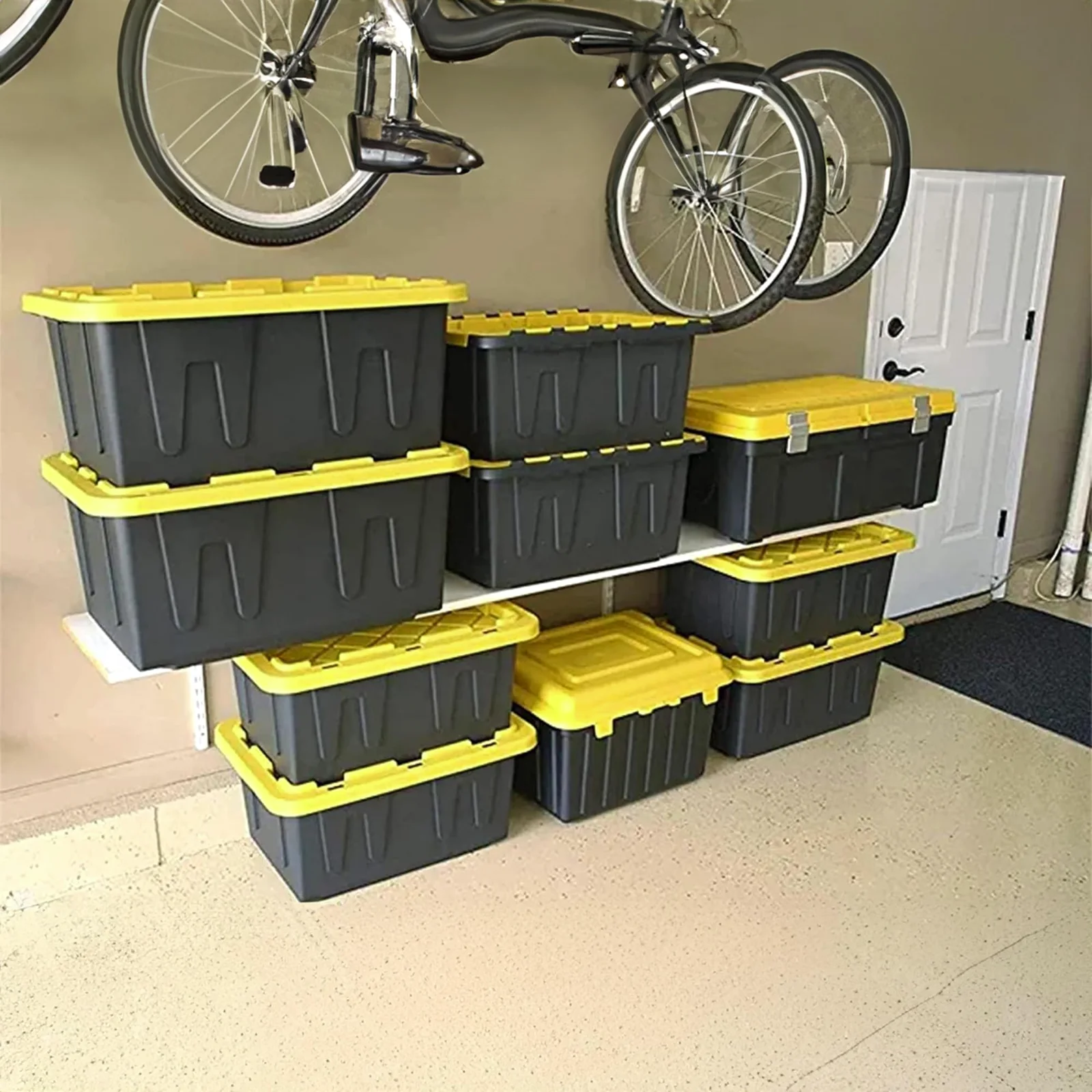
Heavy goes low. Pack dense things like hand tools and files into the bottom tote, and light, bulky things like sleeping bags and pillows into the top one. Closed Durabilt totes stack, and on the 18- and 22-gallon models the lid is recessed so the tote above settles into it instead of sliding. Our 20-gallon latching tote goes a step further, with bases that lock into the tote below, so a column in a basement corner does not creep sideways.
Height is a choice, not a contest. Two closed 30-gallon totes stand about as tall as a workbench, which keeps the top one in easy reach. Build higher and the tote you need tends to be the bottom one, so put the gear you use most at the top of each column and the off-season boxes underneath.
Labels and colors you can read from the door
A label only helps if you can read it with the tote on the shelf. Write it on the lid and on the end that faces the room, in letters big enough to read from the doorway. The 15-gallon Durabilt flip-lid set comes as six matching totes, and a label on each lid tells you which one to pull without opening the others. For a deep tote, tape a short list of contents inside the lid as well, and you will know whether the tent stakes went in before you dig to the bottom.
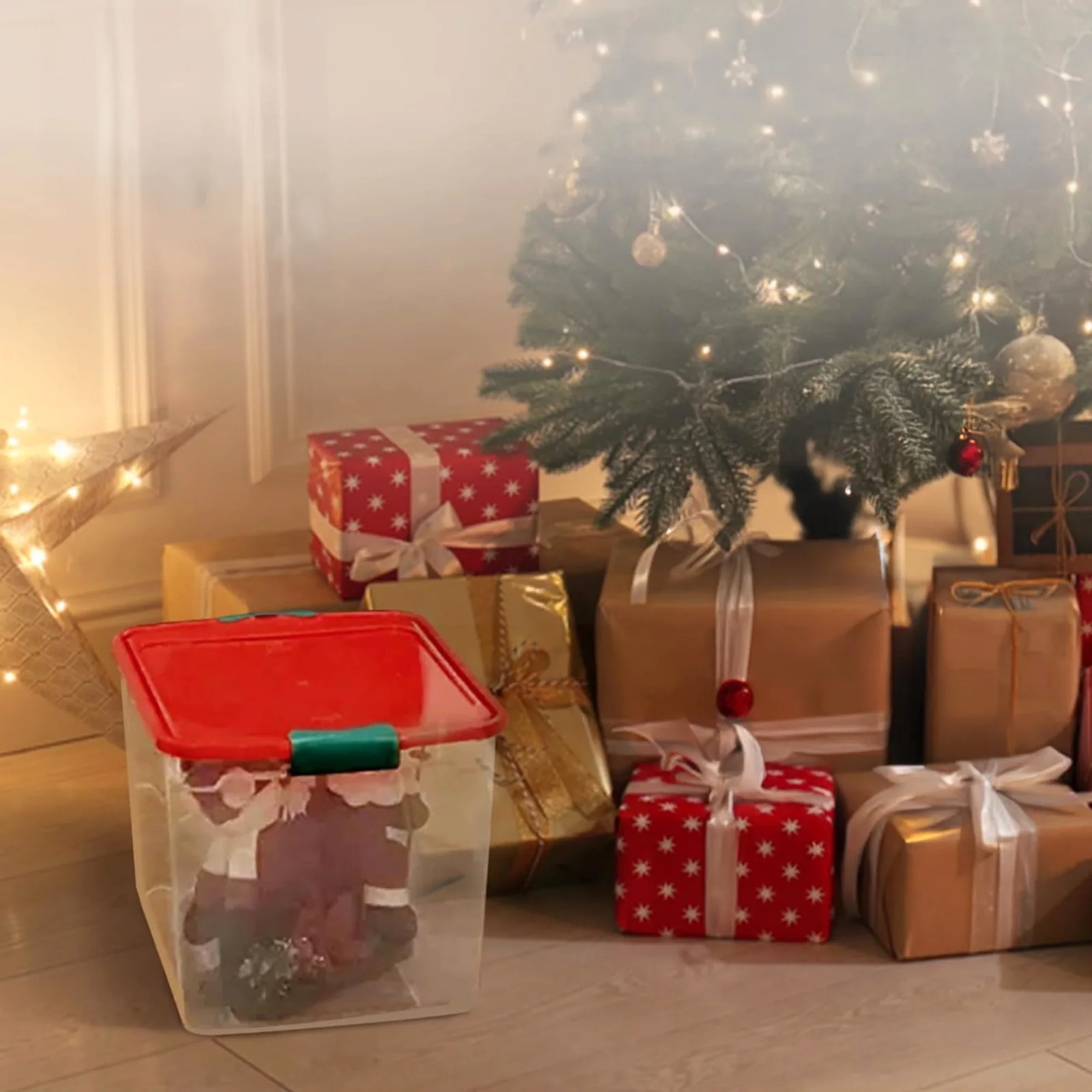
Color does the sorting before you read a word. Our Durabilt totes come in black with a yellow lid for the shop, camo green for hunting gear, and green with a red lid for the holiday boxes. Clear totes show their contents from across the garage, while the black and green version of the 20-gallon tote hides them, which suits a shed or a garage that guests walk through. Pick one color per job and keep to it as the row grows.
Before you buy, measure the shelf or the floor bay where the totes will live. The guide to storage bin sizes shows how quarts and gallons turn into inches, and why the outside size decides the fit.
Every bin named here is part of the HOMZ collection.